Advisory & Growth · Trademark registration
Trademark registration in Kenya, class by class
For a business trading in Kenya under its brand, including a foreign-owned Kenyan company. We run the search, advise which classes the mark needs, file the application with KIPI and follow it to the certificate. The Registrar of Trade Marks decides.
- KIPI official fees included
- Search results in about 3 weeks
- About 3–4 months to registration
- Ten years’ protection, renewable
- first class
- KSh 50,000
- each additional class in the same application
- KSh 20,000
Why register
Only a registered trademark can be sued on for infringement.
The Trade Marks Act gives no action for infringement of an unregistered mark (s.5). Without registration, the remaining claim is passing off.
| Registered mark | Unregistered mark | |
|---|---|---|
| The right | The exclusive right to use the mark for the goods or services registered. ss.7–8 | No right under the Act. |
| Stopping a copy | An infringement action against a mark so close it is likely to deceive or confuse, used in trade. s.7(1) | No infringement action; the remaining claim is passing off. s.5 |
| Evidence | The registration is prima facie evidence that the mark is validly registered. s.46 | No register entry to rely on. |
| The term | Ten years from the application date, renewable for ten years at a time. ss.22(1), 23 | No registration to run or renew. |
A company name is not a trademark.
Incorporation puts the name on the companies register. The exclusive right to use it as a mark for your goods or services comes only from registration under the Trade Marks Act. ss.5, 7
Which class · Nice classification, 45 classes
The class follows what you sell under the mark, not the logo.
A trademark is registered for particular goods or services, sorted into the 45 classes of the Nice classification: 1–34 for goods, 35–45 for services s.6. The exclusive right covers the goods or services registered ss.7–8.
Per class · same application
KSh 20,000
each class after the first; KSh 50,000 covers the first
You make or brand the goods
Classes 25 · 30
The goods class
A clothing label files in Class 25; an own-brand coffee in Class 30.
You sell other makers’ goods, in a shop or online
Class 35
Class 35, retail services
An electronics retailer files in Class 35, not Class 9: its mark brands the shop, not the computers.
Class 35 includes “the bringing together, for the benefit of others, of a variety of goods … enabling customers to conveniently view and purchase those goods”
You provide a service
Classes 42 · 43
The service class
A software developer files in Class 42; a restaurant in Class 43.
Doing both
Doing two of these? Put both classes in one application: KSh 50,000 for the first, KSh 20,000 for the second. A café that roasts its own coffee files Classes 30 and 43. A class added later is quoted as a new application.
File only what you trade in
A registration can be removed for a class where the mark was filed without a genuine intention to use it and has not been used, or after five continuous years without use s.29.
Class advice is part of the fixed fee.
From application to certificate · about 3–4 months
Seven stages to the certificate. The Registrar decides the last three.
We run the search and the filing, then follow the application to the end. Most of the time is the Registrar’s examination and the sixty-day opposition window, which the law fixes s.21; r.46.
01You
Instructions
The mark, what you sell under it, who will own it.
KSh 20,000
02Our team
The search
Across every class in the application.
About 3 weeks
03You · Our team
The result
- Clear: pay the balance, we file.
- Not clear: we advise first.
The KSh 20,000 is kept either way.
Balance
04Our team
Filing
Filed with KIPI; the filing date becomes the registration date. s.22(1)
05The Registrar
Examination
Searched again; accepted, conditioned or refused. r.30; s.20(2)
Varies
If it objects: 90 days to reply; our reply is quoted. r.32
06The Registrar · The public
Advertisement & opposition
Advertised in the Industrial Property Journal; anyone may oppose. s.21; r.46
An opposition is outside the fixed fee.
07The Registrar
Registration
Registered as of the application date; certificate issued. s.22
Start with the search: KSh 20,000, every class, results in about 3 weeks.
About 3–4 months when the Registrar raises no objection and no one opposes. A clear search is not a clearance: the Registrar searches again.
Fixed fee · Kenyan applicants
The fee buys the application and our work, not the outcome.
- first class
- KSh50,000
- each additional class in the same application
- KSh20,000
For a Kenyan applicant, including a foreign-owned Kenyan company. Paid in two stages: KSh 20,000 with your instructions, for the search; the balance once the search comes back clear.
Fee scheduleTrademark registration
Included
- The search, across every class in the application
- Advice on the classes your mark needs
- Preparing and filing the application
- Following it through examination, advertisement and the opposition window to the certificate
- KIPI’s official fees
Not included, quoted if it arises
- Replying to the Registrar’s objections
- Contesting conditions the Registrar attaches to acceptance
On request
- Renewal, every ten years
- Recording a change of owner, name or address
- A mark owned by a foreign company or person
- The Kenyan side of a Madrid international registration designating Kenya
- Oppositions and appeals against a refusal: we take the enquiry and advise on the route
Two payments
KSh 20,000
With your instructions, for the search. Covers every class and is kept whatever the search shows.
KSh 30,000
The balance for one class, once the search is clear. Each additional class adds KSh 20,000.
Search results in about 3 weeks · about 3–4 months to registration
The Registrar of Trade Marks decides s.20(2).
Who decides · Trade Marks Act, Cap. 506
The Registrar may refuse. Every answer has a deadline and a next step.
The Registrar of Trade Marks searches, examines and decides r.30; s.20(2). Anyone may oppose once the application is advertised s.21. The fee buys a complete application and our work through every step; the answer is the Registrar’s.
s.20(2)
The Registrar may refuse the application, or accept it absolutely or with conditions.
Nobody can promise registration
And we don’t. We make the application complete and follow it; the decision is the Registrar’s.
r.32
90 days
On an objection, the applicant has 90 days to reply in writing or ask for a hearing, or the application is treated as withdrawn.
An objection has a clock
We tell you the day it arrives, with the deadline, and quote the reply.
In the fee: Quoted when it arises
r.33
30 / 90 days
On acceptance with conditions: 30 days to accept them, or 90 days to contest them.
Conditions can narrow the mark
We advise whether they narrow it in a way that matters. Accepting them is included; contesting them is quoted.
In the fee: Accepting included · contesting quoted
s.20(2), (4)
On a refusal, the Registrar gives written grounds on request, and the decision may be taken on appeal to the High Court.
A refusal is not the last word
An appeal goes to the High Court.
In the fee: We take the enquiry and advise on the route
s.21
60 days
After advertisement, anyone may oppose within sixty days. The applicant answers with a counter-statement, the Registrar decides, and either side may appeal to the court.
An opposition is a dispute
Not a formality: it is argued and decided.
In the fee: We take the enquiry and advise on the route
We never confirm a mark is available.
Our search lowers the risk; the Registrar runs its own, and anyone may oppose. Only registration settles it. r.30; s.21
Already registered abroad? · Madrid · National · ARIPO
Three routes into Kenya, and one that doesn’t reach it.
A registration abroad doesn’t extend to Kenya by itself. A brand owner abroad files in Kenya, either directly or through the Madrid system, and the owner decides which fee and route apply.
Route 1
Fixed feeThrough your Kenyan company
- Owner
- Your Kenyan company, including a foreign-owned one
- Filed through
- Us, as a Kenyan national application
- Who decides for Kenya
- The Registrar of Trade Marks
- Official fees
- Local, inside our fee
- Our part
- Fixed fee: KSh 50,000first classKSh 20,000each additional class
Route 2
Owned by your foreign company
- Owner
- Your company or you, abroad
- Filed through
- A Kenyan application; KIPI requires an advocate practising in Kenya as agent s.63; KIPI
- Who decides for Kenya
- The Registrar of Trade Marks
- Official fees
- In US dollars KIPI
- Our part
- Quoted on request
- Note
- An owner outside Kenya needs an address for service in Kenya s.64
Route 3
Madrid designation
- Owner
- The holder of the home registration
- Filed through
- Your home trademark office, extending your home application or registration to Kenya Madrid, arts 2–3bis
- Who decides for Kenya
- The Registrar, who may refuse within 18 months art. 5(2); WIPO 102
- Official fees
- Kenya’s own fee, through WIPO WIPO 202
- Our part
- We handle the Kenyan side (examination and any refusal), on request
- Note
- For five years it depends on the home mark: if that falls, so does Kenya’s protection art. 6(3)
Route 4
ARIPO
Does not cover Kenya
Kenya isn’t a party to the Banjul Protocol. Its 13 members (1 January 2026) include Uganda and Tanzania, but not Kenya. ARIPO, Banjul 2026
Already trading in Kenya through a company? Route 1 is the fixed fee. Owning the mark abroad, or holding a Madrid registration? We quote it.
Who should own the mark · s.20(1)
The name on the certificate is the owner.
The application is made by the person claiming to own the mark, in use or intended for use s.20(1). That is usually your company. The choice decides whose right it is, which official fees apply, and what a later change of owner takes.
Usually your company
The exclusive right belongs to the registered owner. A company owner keeps the mark with the business, whoever holds the shares. ss.7–8
Fees follow the owner
A Kenyan company, foreign-owned or not, or an owner living in Kenya, pays local official fees, inside our fixed fee. An owner that neither lives nor has its principal place of business in Kenya pays KIPI’s foreign fees in US dollars, and we quote it. KIPI fees, note 1
A new owner is a new entry
A transfer must be recorded on the register; an unrecorded one isn’t accepted as proof of title. Recording a change of owner is on request. s.28(1), (3)
No Kenyan company yet?Set up a company in Kenya
Why us
We form and keep the companies that own the marks.
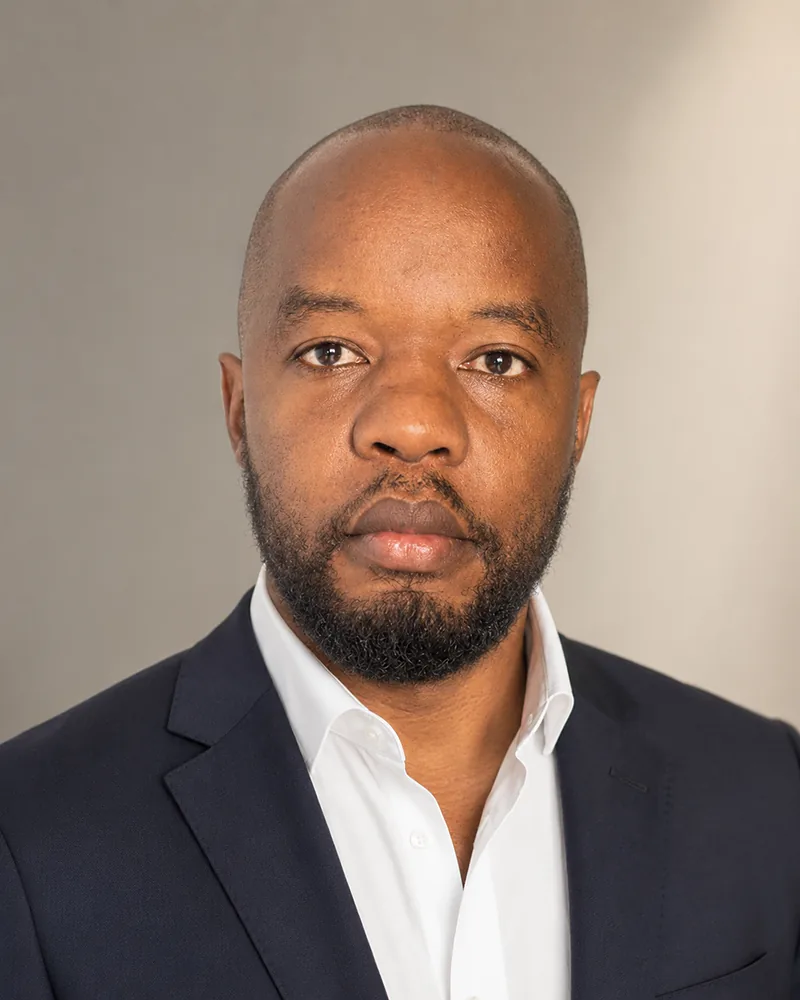
Our practice, led by Edwin Maina, forms companies in Kenya, acts as their company secretary and files their annual returns, year after year. A mark filed in your company’s name stays with the team that keeps your company’s record.
Firm-wide, since 2015
- Companies formed
- 550+
- Years in market
- 10
- Countries served
- 20+
- Compliance rate
- 100%
FAQ
Common questions before you register a trademark.
Cost & time
Run a search, choose the classes, then file an application with KIPI. The Registrar of Trade Marks examines it, advertises it in the Industrial Property Journal and, after a sixty-day opposition window, registers the mark and issues the certificate. We handle each stage for a fixed fee; the Registrar decides.
s.20(2)r.46s.22
KSh 50,000 for the first class and KSh 20,000 for each additional class in the same application, KIPI’s official fees included. You pay KSh 20,000 with your instructions, for the search, and the balance (KSh 30,000 for one class) once the search comes back clear. Replies to the Registrar’s objections are quoted if they arise. The fixed fee is for Kenyan applicants; a foreign-owned mark is quoted on request.
About 3–4 months to registration, when the Registrar raises no objection and no one opposes. The search results come back in about 3 weeks. An objection allows 90 days to reply, which adds time.
r.32
Classes
The class follows what you sell under the mark, not the logo. Own-brand goods go in their goods class (1–34); a shop selling other makers’ goods registers its retail services in Class 35; services go in their own class (35–45). We advise on the classes before anything is filed.
One class is enough if the mark is used in one line of business. Filing goods classes you don’t trade in invites removal for non-use. Put every class you need in the first application, at KSh 20,000 each; a class added later is quoted as a new application, because the work is almost the same.
s.29
Yes, if you provide services under it. A shop’s logo brands its retail services, so it is registered in Class 35 rather than the goods classes.
A brand name is protected as a word mark, through the same application, class by class. Registering a company or business name doesn’t protect it as a trademark: without registration there is no infringement action, only passing off.
s.5
Ownership & protection
Usually your company. The application is made by whoever claims to own the mark. A Kenyan company, foreign-owned or not, pays local official fees inside our fixed fee; a foreign owner pays KIPI’s foreign fees in US dollars, needs a Kenyan address for service, and is quoted on request. A later change of owner must be recorded.
s.20(1)s.64s.28
Kenya is in the Madrid system, so a mark registered at home can designate Kenya through your home office; KIPI may refuse within 18 months, and the registration depends on the home mark for five years. Or file a national application: through your Kenyan company at our fixed fee, or in the foreign owner’s name, quoted on request. An ARIPO registration doesn’t cover Kenya. For a Madrid designation we handle the Kenyan side, scoped on request.
No one can before the Registrar decides. Our search comes first (about 3 weeks) and lowers the risk; the Registrar then runs its own search, and anyone may oppose within sixty days of the advertisement.
r.30s.21
The applicant files a counter-statement, the Registrar hears both sides and decides, and either side may appeal to the High Court. An opposition is outside the fixed fee: tell us if one arrives and we’ll advise on the response.
s.21(3)–(6)r.46
Ten years from the application date, renewable for ten years at a time. Renewal opens 90 days before expiry, with a one-month late window and restoration after that. We scope renewal on request.
ss.22(1), 23rr.64–68
Not answered here?
Ask us on WhatsApp (opens WhatsApp in a new tab)Start
Start with the search.
Tell us the mark and what you sell under it. The search comes first, and we advise before any balance is paid.
EnquiryTrademark registration
What happens next
We reply within one business day.
The search: KSh 20,000, results in about 3 weeks.
You decide. The balance (KSh 30,000 for one class) is paid once the search comes back clear.